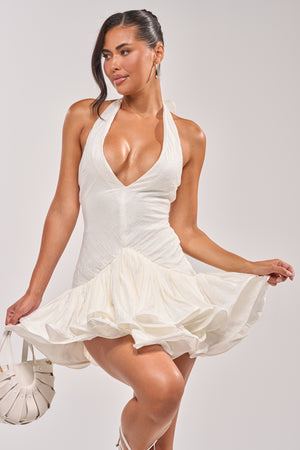
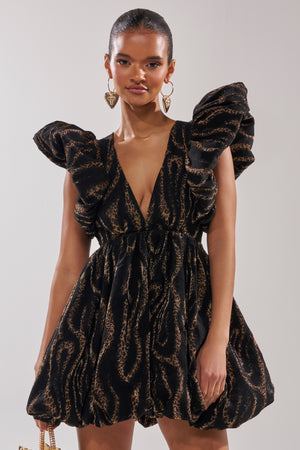
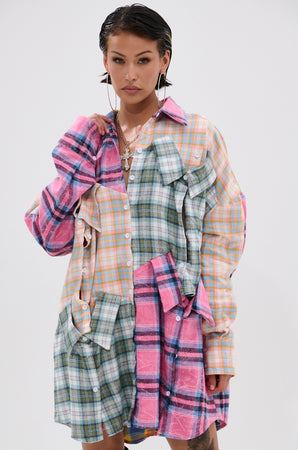
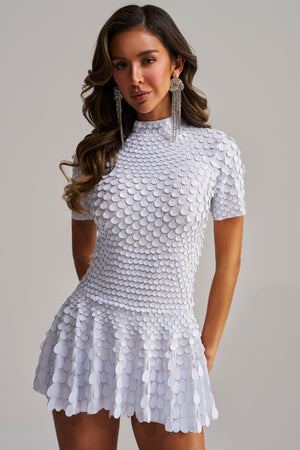
Custom Suit for the Japanese and Korean Market — Antibacterial Knit with Sequin Work
We supply suit to japanese and korean buyers built for cold Korean winters. Cloth weight, weave openness and colour fastness are specified for the climate first: Antibacterial Knit at 120-150 gsm, shade-matched to hold through the rainy-season quick-dry demand. Programmes start at 150 pieces per style per colour and ship to Tokyo or Osaka.
The failures here are predictable: suppliers who disappear once the deposit is paid, and unclear responsibility when a defect shows up after washing. We lock the specification before bulk — weight, shrinkage, stitch density and tolerance — and prepare the conformity documents for Japan so containers clear instead of accruing demurrage while the rainy-season quick-dry demand passes.

Specification
| Product | Suit |
|---|---|
| Market | Japan and Korea (Japan) |
| Base fabric | Antibacterial Knit (120-150 gsm) |
| Decoration / finish | Sequin Work |
| Climate notes | Built for cold Korean winters |
| Size range | Japanese kids grading, height-based |
| Colour options | 6 Pantone-matched shades |
| MOQ | 150 pieces per style per colour |
| Sampling | 10 working days, 4 days per revision |
| Bulk lead time | 20-60 days after approval |
| Compliance | Japanese Household Goods Quality Labelling compliance; Japanese Household Goods Quality Labelling Act |
| Ship to | Tokyo or Osaka |
What Japanese and Korean buyers can customise
- Garment Dyeing — available on Antibacterial Knit, quoted per position and per colour.
- Ruching — available on Antibacterial Knit, quoted per position and per colour.
- Beading and Embroidery — available on Antibacterial Knit, quoted per position and per colour.
- Flat Embroidery — available on Antibacterial Knit, quoted per position and per colour.
- Woven Label — available on Antibacterial Knit, quoted per position and per colour.
- Pleating — available on Antibacterial Knit, quoted per position and per colour.
- Applique Embroidery — available on Antibacterial Knit, quoted per position and per colour.

How we produce it
- Tech pack review and fabric confirmation for cold Korean winters
- Lab dips or print strike-off approved against the regional palette
- Antibacterial Knit-spec prototype graded to Japanese kids grading, height-based
- Fit sample and wash test, then a pre-production sample
- Bulk cutting with sequin work applied under controlled settings
- In-line inspection, final AQL 2.5 inspection and packing for Tokyo or Osaka
Where it sells
- Retail and wholesale — packed to size ratio for regional distribution
- Corporate and hospitality uniforms — repeatable spec for seasonal reorders
- School and institutional programmes — durable cloth at a fixed landed cost
- Online and marketplace sellers — restockable spec held on file
- Festive and seasonal collections — timed to the rainy-season quick-dry demand

Import, duty and delivery
Japanese Household Goods Quality Labelling compliance is arranged before the goods leave the factory. We ship to Tokyo or Osaka with the commercial invoice, packing list and certificate of origin. Buyers here inspect to a tighter standard: needle detection, dimensional stability after washing and seam appearance are checked before packing, and labelling follows the Household Goods Quality Labelling rules rather than a generic care tag.
FAQ
How long does sampling take?
A first prototype is typically ready in 10 working days after the tech pack is confirmed, including fabric sourcing if the base cloth is not in our stock library. Revisions add about 4 days each.
What file formats do you need for artwork?
Vector files (AI, EPS, PDF) give the best print and embroidery results. For raster artwork please supply at least 300 dpi at the final print size. We digitise embroidery files in-house and return a sew-out photo for approval.
Do you provide compliance documents?
We can arrange OEKO-TEX, GOTS, BSCI, WRAP and ISO documentation as well as third-party testing reports for Japanese Household Goods Quality Labelling Act, and we support REACH, CPSIA and Prop 65 declarations for the relevant markets.
What is the minimum order quantity?
Standard programmes start at 150 pieces per style and colour. We can split sizes across a size set, and for first orders we often accept a mixed-colour run to help you test the market.
Start your Japanese and Korean programme
Share a reference photo or a sample garment and we will reverse-engineer the specification for your own label.